
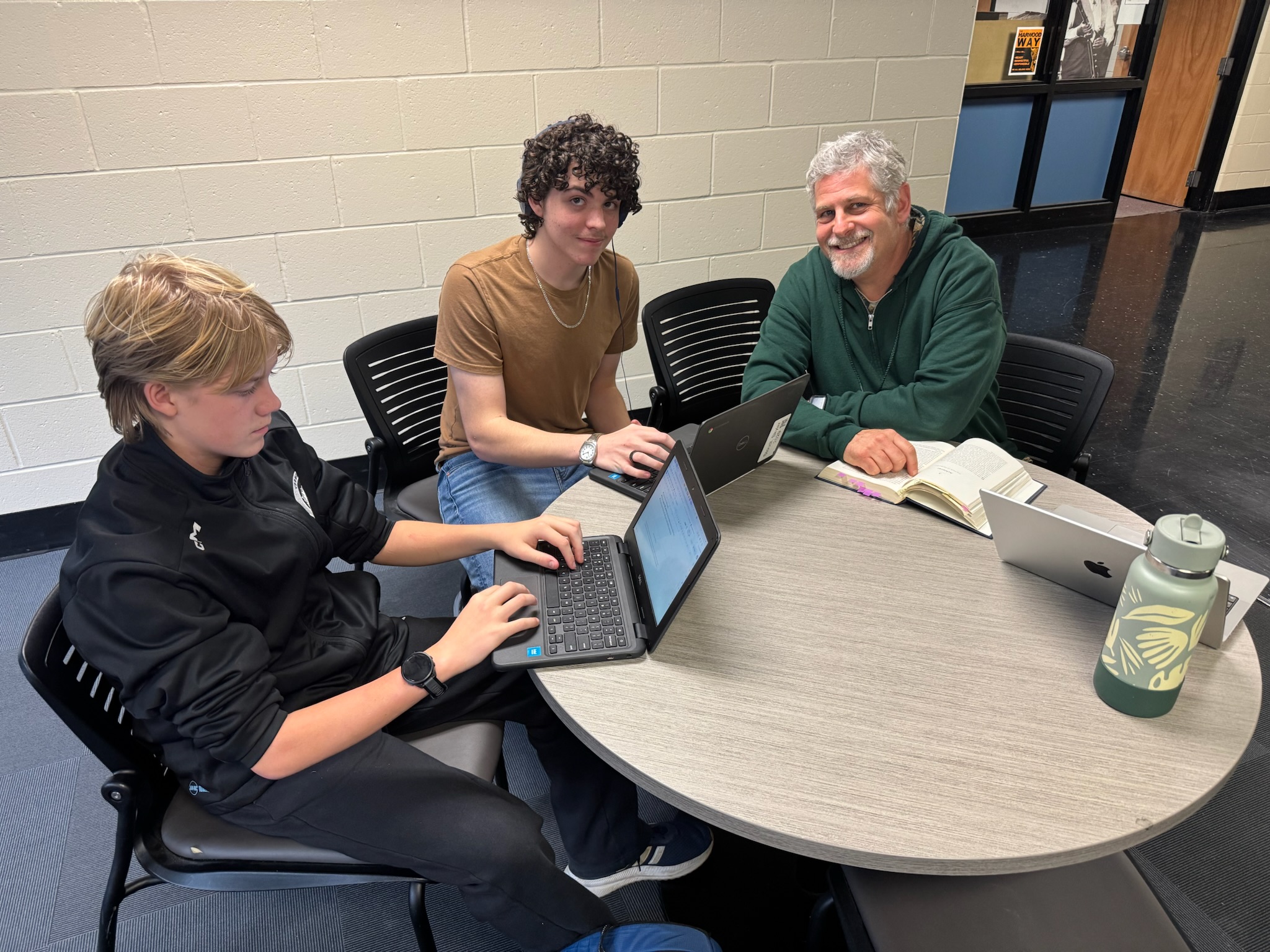
Could pizza, candid conversation, and more hands-on experiences be the key to re-engaging boys in school and redefining healthy masculinity?
I recently attended a community screening of Gone Guys, a Vermont-made documentary spotlighting the struggles of boys and young men. Directed by Chad Ervin, produced by Angela Snow, and made in partnership with the Tarrant Foundation and The Vermont Community Foundation, the film moved me deeply. The boys and young men in the film share stories of feeling misunderstood, unmotivated, disconnected, lost, and judged in middle and high school, leading to a lack of direction, drive, and hope in the years that follow. The statistics on screen paint a bleak picture: boys’ performance in school has been dramatically declining since the passage of Title IX in 1972 while their mental health struggles have been climbing precipitously. For anyone who has worked in a middle or high school for the last twenty years, the story presented in Gone Guys may not feel surprising, but to me, the familiarity of the problem doesn’t make it any less alarming.
The relevance of Gone Guys transcends our brave, little state, but it is filmed in our rural towns, schools, and forests, bringing its content home to me in a powerful way. The film is painful and sad, at times making me feel like the epidemic of boys’ disengagement is too big to take on. But it was the packed-house-full of people who showed up in my town to watch Gone Guys, as well as the boys and men who showed up on screen to share their personal stories, that offer me hope.
One of the students on our Collaborative Work Group, a junior named Dahlia, told me during the Rowland Conference that she feels like Harwood is mired in a “culture of nonchalance.” According to Dahlia, there are plenty of students at Harwood who strive to succeed and push themselves to achieve their goals, but it is deeply uncool to be caught trying hard. In fact, she shared, raising your hand too much in class and visibly displaying evidence of your effort is likely to cause shade to get thrown your way. When asked, Dahlia affirmed that this culture of nonchalance is largely propped up and maintained by male students. At the same time, male membership in the National Honors Society is down, as is enrollment in many AP courses. If you come to Harwood’s awards assembly at the end of the year, I guarantee that it will be predominantly female students called to the stage for recognition. Our boys are crushing it in sports but struggling academically and socially. Gone Guys, Dahlia’s insights, and my own observations are all telling me that the boys of Harwood are not okay, and it’s time to do something about it.
The film offers some different pathways to engage and support boys that intrigue and interest me. A teacher from Hartford Middle School leads a club in which boys feel free to voice their struggles, ask questions about their lives, and share different ideas about growing up and what being a man can look like. Joe Carroll, a teacher from Montpelier High School, facilitates a class called Healthy Masculinity in which young men learn how to show up for and support each other, building skills they will take with them into the new communities they join and the new relationships they form. At North Country High School, teachers like Ryan Anderson and John Castle take boys outside and get up close and personal with the place they call home in an interdisciplinary program called The Kingdom Course. All three of these ideas feel promising and worth pursuing at Harwood, but I think I need to pull together a focus group of dudes to discuss which has the potential for the greatest impact. Could a club that meets boys where they are, invites them in with pizza, and offers a space to share with candor and care help turn the tide of disengaged boys? Would a discussion-based class focused on getting real and breaking down healthy versus toxic masculinity help crack our culture of nonchalance? Or might a hands-on class that gets students outside, moving their bodies and using tools to do meaningful work in the place they live help boys engage more deeply in school?
I am more filled with questions than answers, but I am more filled with hope than with despair. My next step is to find some brave young men willing to go on this journey with me. Stay tuned.
Leave a Reply